Showing posts with label food prices. Show all posts

Tuesday, August 28, 2012

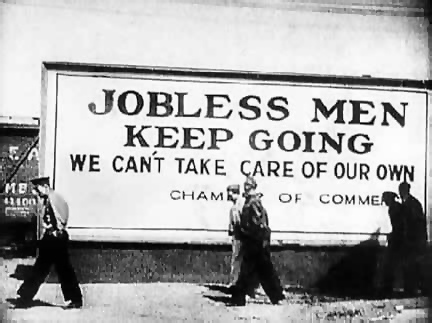
2013 Great Depression: America Heading For Economic Collapse


Fear continues to grow in America. Drought, soaring food prices, unemployment, big banks up to their same old greed-driven tricks, threat of war with Iran, and degrading loss of liberty through legistation such as the Patriot Act, SOPA, and the NDAA all add to a comprehensively negative outlook for the future. However, of the multitude of real and perceived catasrophies that could inevitably fall upon the American people, one primary fear outweighs all the others... that of an economic collapse.

Here is the list of Feared Catastrophies as measured in a survey by the Ecohealth Alliance, and their percentage of importance.
  • Economic Collapse: 46%
  • Natural Disaster: 46%
  • Terrorist Attack: 44%
  • Global Disease Outbreak: 33%
  • Global War: 27%
  • Nuclear Accident: 25%
  • Global Warming: 22%
  • Fuel Shortage: 15%
  • Cyber War: 8%
  • Famine: 8%
  • Oil Spill: 6%
  • Industrial Accident: 5% 
Overwhelmingly, the people's trust in a secure economy, and the leaders who administer economic policies, is failing. Nearly two-thirds of those polled fear a complete economic collapse based on the news and evidence provided to them in both the media, and financial experiences such as unemployment, higher retail prices, and lifestyle changes such as losing a home, or falling home values.

Besides polling, the raw economic data also suggests an economic collapse as being of high probability in the near or medium term future. Global banks. which make up the primary central bank shareholders for governments in the west, have all fallen in value, been downgraded by ratings agencies, and have experienced liquidity problems that have forced them to the brink of insolvency at one point or another in the past three years.
  • BofA: -60.38%
  • Citi: -44.76%
  • Goldman Sachs: -46.41%
  • JPMorgan: -23.03%
  • Morgan Stanley: -45.24%
  • RBS: -50%
  • Barclays: -34.32%
  • Lloyds: -63.02%
  • UBS: -29.33%
  • Deutsche Bank: -28,55%
  • Crédit Agricole: -56.04%
  • BNP Paribas: -37.67%
  • Société Générale: -59.57%
Lastly, the American people have had the opportunity to see what an economic collapse in nations can do to the people, and the policies of governments in both Greece, and in several Middle Eastern countries in 2011. When the solvency of a government fails, and international monetary agencies such as the ECB and IMF attempt to impose austerity measures such as added taxation, or cuts in public safety nets, businesses begin to fail in large numbers, and people grow the internal fortitude to lash out at the system.

If you want to see what happens when a collapse happens and a depression begins, just look at what is happening in Greece....
  • 100,000 businesses have been closed since the beginning of the crisis.
  • About a third of the nation is now living in poverty.
  • The unemployment rate for those under the age of 24 is 39%.
  • The number of suicides has increased by 40% in the past year.
  • Thefts and burglaries have doubled.
  • Things have gotten so bad that hundreds of families in Greece are abandoning their children.
Little has changed in the economic outlook for the United States in the past year, the growing fears of an economic collapse remain very high in the minds and fears of many Americans. In the past 10 years, millions of jobs, and hundreds of thousands of businesses have failed, or move overseas, and governments on a local and Federal level have borrowed themselves into insolvency. With more people expected to fall outside of the safety nets of unemployment, and the ability of their legislators to solve the economic problems hanging over the country like a Damocles Sword, the remaining avenue for Americans will be the streets, not the ballot box if their primary fear of economic collapse does take place.

Drought 2012: Harsh Reality of Higher Food Prices

Droughts tend to produce vast yield variations. This week's ProFramer crop tour reaffirmed this tendency and as UBS notes, conditions declined with the expectations of low yields compounded by the harsher reality of poor quality - likely to be a major issue for corn feeders. 

Interestingly, Soybeans looked good from the road but up close (pod formation and beans/pod) were well below normal; and UBS adds to forget the CME for the moment - the cash market is now the attention grabber as they expect it to lead this rally in Ags higher - especially the July 2013s, raising an interesting question of if (or when) the US will restrict exports? Especially with no let-up in the drought conditions.

Lower yields AND lower quality...


With Corn and Soybean conditions data just awful...
and its not getting better anytime soon...


Thursday, August 23, 2012

Mississippi River Traffic Moving Again


Barge traffic resumed along an 11-mile (17.7 kilometer) stretch of the drought-ravaged Mississippi River near Greenville, Mississippi, but dozens of vessels waited their turn on Thursday to pass in the shrunken waterway.
The Mississippi River, the country's primary highway for barge traffic, has dropped as much as 14 feet in the drought that has also withered crops in the Midwest and triggered wildfires in the West.
The latest incident occurred around dawn on Wednesday, just hours after the Coast Guard opened the channel near Greenville. Seventeen of the roughly 100 ships stuck since Monday made it through before one became lodged in the sand, forcing authorities to close the channel again for roughly 12 hours.
Traffic resumed late Wednesday afternoon with southbound vessels going through first, then northbound. After all those boats get through, the Coast Guard will continue directing river traffic on a staggered schedule, Gomez said.
As of Thursday morning, some 50 vessels remained backed up in the channel, waiting for their turn to pass.
Barge operators typically haul some $180 billion in goods annually, and the Mississippi River is their main artery with some 566 million tons (513.5 million tonnes) of freight going up and down the inland waterway each year, according to the American Waterways Operators, a national trade association representing tugboats, tow boats and barges.
The drought's effect on the river has caused logistical and financial woes for the barge industry.
Barges must unload 17 tons (15 tonnes) of cargo for every one-inch loss of water and 204 tons (185 tonnes) for every one-foot (30.5 centimeter) loss of draft, said Tom Allegretti, president of the trade association.
Draft is the vertical distance between the ship's waterline and the lowest point of its keel.
Allegretti said it would take 130 semi trucks or 570 rail cars to haul the freight unloaded by one large barge on the Mississippi River under those conditions.
OPERATORS LOSING MONEY
Barge operators are losing an estimated $10,000 per day for every one of their boats that sits idle near Greenville, said Ann McCulloch, spokeswoman for the American Waterways Operators said.
With 97 vessels idle on Monday and Tuesday, and 105 vessels idle on Wednesday, according to Gomez, that's nearly $3 million in lost revenues in three days.
"It's a day-to-day situation now to manage the stoppage," McCulloch said.
If water levels drop further, prices could rise on the raw commodities commonly shipped by boat, including coal, grain, petroleum and steel.
Taxpayers also share some of the drought's financial burden. The U.S. Army Corps of Engineers has dredged the river almost nonstop since the start of the drought with equipment costing as much as $85,000 per day, Corps spokesman Kavanaugh Breazeale said.
Dredging removes the silt that falls to the bottom of the river - a problem that accelerates as water levels drop. The Corps must keep the channels at least nine feet deep and 300 feet wide for safe passage of vessels.
Conditions were expected to improve in the short-term near Greenville, where the Coast Guard projects the river will rise about one foot by Monday.
But it forecasts a one foot decrease by Monday in Memphis, which has had its own headaches this summer. On August 9, the American Queen steamboat - a multilevel passenger vessel carrying some 300 pleasure passengers - got stuck near Memphis.
The river there could hit 10 feet below baseline by Wednesday, the Coast Guard said. That is nearing the historic low set in 1988 when river traffic came to a halt and an estimated $1 billion in revenue was lost.
Reuters - Colleen Jenkins, Greg McCune and Vicki Allen


Drought Worsens In Plains


While other corn growers already have knocked down their drought-ravaged crops to feed them to livestock, Nebraska farmer Doug Nelson still waits for his maize to mature, well aware it won’t be a banner year.
On the day a new report suggested the nation’s worst dry spell in at least a generation is deepening in America’s breadbasket, Nelson said Thursday he expects to harvest anywhere from nothing to 43 bushels per acre on his unirrigated acreage, a far cry from the 120 to 140 bushels he'd typically get. On the irrigated land, he could see 150 to 200 bushels an acre; in previous years, Nelson would see a minimum of 180 bushels.
‘‘For the most part, we haven’t seen a hit like this since 1974, as far as my career goes,’’ said the 61-year-old Nelson, who farms some 5,000 acres near Wayne. ‘‘But we'll have the combines going here in probably another month, and then we'll know for sure.
‘‘You can walk these fields and run into good spots, then walk another part where there’s a different soil and have nothing.’’
That’s part of the growing frustration with an increasing drought in Nebraska and several other farming states, despite recently cooler temperatures that have, at the very least, given people a break from this summer’s stifling heat.
The U.S. Drought Monitor’s weekly map showed that, as of Tuesday, just over two-thirds of Iowa, the nation’s biggest corn producer, was in extreme or exceptional drought — the worst two classifications. That’s up more than 5 percentage points, to 67.5 percent, from the previous week.
Nearly all of Nebraska, Kansas, Missouri and Illinois are in extreme or exceptional drought, with Illinois showing the most dramatic climb, spiking 17 percentage points in one week to 96.72 percent, according to the map.
In neighboring Indiana, where 5 inches of rain fell in some parts over the past week or so, the area in exceptional or extreme drought fell 9 percentage points, to 37.09 percent.
Conditions cooled in the region, but little or no meaningful rain fell, said Mike Brewer, a National Climatic Data Center scientist who put together the latest map, which is released by the National Drought Mitigation Center at the University of Nebraska in Lincoln.
The lack of rain allowed exceptional and extreme drought conditions to continue expanding in the area from northern Missouri and into Kansas and Nebraska, he said.
On Wednesday, the USDA added 33 counties from eight drought-stricken states to its list of natural disaster areas, bringing that tally to 1,821 counties in 35 states over the past six weeks. That’s more than half of all U.S. counties, and the vast majority received the designation because of drought.
Plains farmers have begun harvesting what corn managed to survive, although many growers cut their fields weeks ago, chalking the year up as a loss. Some ranchers have sold livestock because they had no grass for grazing or money to buy feed, the price of which has soared.
In the lower 48 states, there was a subtle increase in the overall area experiencing at least some drought, from 61.77 percent last week to 63.2 percent. There was little change in the overall area seeing exceptional or extreme drought, which went from 6.26 percent last week to 6.31 percent this week.
Rain is expected in the northern Plains in coming days, though it may be too late to save many withered crops.
The U.S. Agriculture Department twice has slashed its forecast for this year’s corn and soybean output because of the drought. In the spring, it forecast the nation’s biggest harvest, as farmers planted 96.4 million acres of corn — the most since 1937. But the agency now expects the nation to produce 10.8 billion bushels, the fewest since 2006.
If that estimate holds, the federal government says it will be enough to meet the world’s needs and ensure there are no shortages. But experts say food prices will almost certainly climb — corn is widely used in products ranging from cosmetics to cereal, colas to candy bars.
While just 1 percent of the nation’s corn crop is brought in from the fields by this time of year, the USDA said Monday in its weekly crop progress report that 4 percent of the harvest is complete. The reaping is farther along in Kansas, Missouri, South Dakota, Kentucky and Tennessee.
In an occupation that’s at nature’s mercy, ‘‘we've got to calculate we’re gonna lose a crop once in a while and calculate that into our expenses,’’ said Nelson, whose northeastern Nebraska farmland is about 60 percent corn, the rest soybeans. ‘‘Sometimes it’s heat, drought, excessive rains, bugs, winds. I guess that’s what keeps us coming back for next year.’’
© Copyright 2012 Globe Newspaper Company.

Wednesday, August 22, 2012

Corn Shortage: The Next Big Crisis


By now you know we're experiencing the worst drought in over 50 years which has sent corn prices soaring to record highs. With over 60% of the US in the midst of drought conditions, the USDA has said that 50% of America's corn crop will be in poor to very poor condition.

With corn supplies are at their lowest levels in 17 years and with corn being such a large part of the industrial food chain, we have the 'perfect storm' for serious food shortages.

Corn feeds the chickens that provide us with eggs. Corn feeds the cows that provide us with beef and dairy products. Nearly all soda contain high fructose corn syrup. Even beer is fermented from glucose that originated in corn.

Corn is in margarine, coffee sweetener, icing, gravy, hot sauce, mayonnaise, soups, cake mixes, snacks foods, salad dressings, frozen waffles, and on and on. If you eat produce in any form, it’s likely got corn in or on it: corn was in the pesticide, the cardboard in which it was shipped, even the wax applied to its surface to give it a sheen.

Corn is in toothpaste, disposable diapers, matches, trash bags, disposable batteries, make up, even magazines covers.

Corn in approximately 25% of all items located in your local grocery store. And of course, all the fuel for our cars and trucks contain ethanol which is made from, you guessed it, corn.

And the situation is equally bad for soybeans, the second largest produced crop in the US: today inventories are at their lowest levels in 32 years. And the current drought has resulted in 39% of this year’s soybean crop being in poor to very poor condition.

Forget about Europe and the imminent global financial collaspe, the corn (and soybean) shortages is the REAL CRISIS.

Drought Hits Mighty Mississippi


As if high temperatures, wildfires, and dried up crops weren't enough, the drought plaguing the US is now crippling the nation's largest river.

The Mississippi River is one of the nation's main arteries of commerce. More than 500 tons of grain, coal, and other goods pass along its banks every year. With water levels on the Mississippi so low, barges are having trouble getting through creating delays in shipping crucial goods can costing hundreds of millions a day.

The drought of 2012 is shrinking the river. In some places, it's been reduced to half its size. The Army Corp of Engineers is struggling to keep water levels at nine feet, the legal level to keep the Mississippi open for traffic. River levels haven't been this low since the late 1980s, and they're getting dangerously close to breaking the all-time low record.

In one stretch of the Mississippi, several barges got stuck. The situation prompted the U.S. Coast Guard to close an 11-mile section of the river, stranding 97 boats and barges. Dredge operators are hard at work trying to make the water deep enough for the barges to pass through. Barges carrying lighter loads to help navigate the shallow waters. But the less they carry, the more consumers pay. More than 400,000 jobs depend on the flow of traffic in the Mississippi River.

If the Mississippi is forced to close, it will cost the U.S. economy $300 million a day and food prices will soar. Corn and soybean prices are at record highs. The price of corn is up 68 percent from June and soybean prices are up 39 percent.

Drought 2013 Means Higher Grocery Bill In 2013


The U.S. Department of Agriculture warned Thursday that this year's drought will likely cause higher grocery bills in 2013.

The Department said consumers should expect to pay 3 to 4 percent more on meat, dairy, and bakery products.

Farmers have already been forced to raise their prices.

"We're not trying to rip you off. It's just we're trying to make a living," Michigan farmer Ethan Klug said.

"We used to get probably close to 30 to 40 dozen eggs a week, and we're getting about 7 to 8 dozen eggs right now because of the heat," added Armand Bechard, owner of the Bechard Family Farm.

Agriculture Secretary Tom Vilsack said the federal government will provide the assistance it can.

But he said the most important thing is to "pray for rain."