Showing posts with label food shortage. Show all posts

Thursday, September 6, 2012

Drought 2012: A Food Price Catastrophe

English: The Martin, a ship unloads pallets of...

Droughts in the U.S. have forced the U.S. Agriculture Department to slash its forecast for the nation’s corn crops to only 10.8 billion bushels, the lowest amount since 2006.

“If that estimate holds, the federal government says it will be enough to meet the world’s needs and avoid shortages, but experts say food prices will almost certainly climb as corn is an ingredient in many products,” the AP reported.

These droughts, other global environmental events, and the food shortages they have caused have U.N. officials scared enough to warn that the world may soon face a food price “catastrophe.”

“We need to act urgently to make sure that these price shocks do not turn into a catastrophe hurting tens of millions over the coming months,” the Food and Agriculture Organization of the United Nations FAO, the International Fund for Agricultural  Development, and the World Food Programme said in a statement yesterday.

“We need to remain vigilant and prepare for the worst in the short run, while working on sustainable solutions for the long haul,” the statement adds.

The agencies claim poor and food import-dependent countries would be hit hardest by spikes in raw food commodities. They also argue world leaders need to take immediate action, including investing “much more in agriculture and social protection, including programmes that help poor people to access food that has become unaffordable in their local markets.”

“Until we find the way to shock-proof and climate-proof our food system, the danger will remain. In the short term, this has costs, not only for those directly impacted, but also for the international community at large,” the statement reads.

“For instance, the World Food Programme (WFP) estimates that every 10 per cent increase in the price of its food basket means it has to find an extra $200 million a year for food assistance,” it adds.

The statement also says countries should avoid “panic buying” and export restrictions.

We may need to review and adjust where applicable policies currently in place that encourage alternative uses of grains. For example, adjusting biofuel mandates when global markets come under pressure and food supplies are endangered has been recommended by a group of international organizations including FAO, IFAD, the International Monetary Fund, the Organisation for Economic Co-operation and Development, the UN Conference on Trade and Development, WFP, the World Bank and the World Trade Organization. That recommendation, made to the 2011 G20 summit in Paris, still stands today.

The recommendation to ease up on biofuel mandates isn’t exclusive to European leaders. In fact, that argument is taking place in Washington right now.

One of the greatest threats the droughts and food shortages pose is the burden it will put on the cost of bringing goods to market. This is a threat not just to American consumers, but to consumers worldwide. Mandates requiring that fuel be mixed with a crop that has suffered greatly from the droughts will only drive that cost up.
Enhanced by Zemanta

How To Save On Rising Food Costs

The U.S. Department of Agriculture (USDA) released a report recently predicting an increase in food prices, especially among animal products. That's thanks to a hard crop year in the Midwest, where droughts drove corn and soybean prices up. Those two items have a domino effect on all other food prices, including meat and dairy, as corn and soybeans are used for animal feed.

Among the predictions: Beef and veal will rise by an estimated 5 percent by 2013, pork will rise 3.5 percent, and dairy will rise 4.5 percent during the same period.

Couple that with the premium health food seekers pay for Farmers' market fare and organic staples, and you're looking at one whopper of a grocery bill. So what can you do? Here are some top tips to keep food prices down and quality up.

  • Look for alternatives to meat: This may sound like an obvious one, but replacing meat with vegetable sources of protein such as rice, beans, and lentils, will always help reduce costs. That goes double during this period, when the USDA specifically predicts a price hike in animal protein.
     
  • Skip pre-packaged meals: Not only are boxed, frozen meals, pizzas, and burritos more likely to be processed and laden with excess sugar, fat, and salt, they're also generally more expensive, according to the EWG.
     
  • Think about the nutrient you want: Want fiber? Black beans and popcorn may be the cheapest sources. Need to up your protein intake? Go for canned tuna. Thinking ahead may help you avoid buying more than what you need.
     
  • Preserve! Buying in bulk is a cheap way to get a lot of food in your larder, but healthful fruits and veggies can go bad before you can eat them. That's where pickling, jarring and canning can come in handy—it's a cheap, healthful way to keep seasonal produce all year round. Check out the National Center for Home Food Preservation, a government resource that provides guides on safe canning, pickling, and other forms of preserving.
     
  • Clip coupons: This is another obvious one, but so many people don't do it. Using coupons is a great way to get organic and other pricier health foods at a discount. And organic brands like Cascadian Farm, Muir Glen, and Amy's often have coupons attached to their packaging.

Enhanced by Zemanta

Tuesday, August 28, 2012

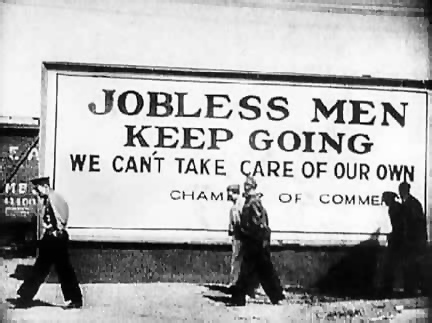
2013 Great Depression: America Heading For Economic Collapse


Fear continues to grow in America. Drought, soaring food prices, unemployment, big banks up to their same old greed-driven tricks, threat of war with Iran, and degrading loss of liberty through legistation such as the Patriot Act, SOPA, and the NDAA all add to a comprehensively negative outlook for the future. However, of the multitude of real and perceived catasrophies that could inevitably fall upon the American people, one primary fear outweighs all the others... that of an economic collapse.

Here is the list of Feared Catastrophies as measured in a survey by the Ecohealth Alliance, and their percentage of importance.
  • Economic Collapse: 46%
  • Natural Disaster: 46%
  • Terrorist Attack: 44%
  • Global Disease Outbreak: 33%
  • Global War: 27%
  • Nuclear Accident: 25%
  • Global Warming: 22%
  • Fuel Shortage: 15%
  • Cyber War: 8%
  • Famine: 8%
  • Oil Spill: 6%
  • Industrial Accident: 5% 
Overwhelmingly, the people's trust in a secure economy, and the leaders who administer economic policies, is failing. Nearly two-thirds of those polled fear a complete economic collapse based on the news and evidence provided to them in both the media, and financial experiences such as unemployment, higher retail prices, and lifestyle changes such as losing a home, or falling home values.

Besides polling, the raw economic data also suggests an economic collapse as being of high probability in the near or medium term future. Global banks. which make up the primary central bank shareholders for governments in the west, have all fallen in value, been downgraded by ratings agencies, and have experienced liquidity problems that have forced them to the brink of insolvency at one point or another in the past three years.
  • BofA: -60.38%
  • Citi: -44.76%
  • Goldman Sachs: -46.41%
  • JPMorgan: -23.03%
  • Morgan Stanley: -45.24%
  • RBS: -50%
  • Barclays: -34.32%
  • Lloyds: -63.02%
  • UBS: -29.33%
  • Deutsche Bank: -28,55%
  • Crédit Agricole: -56.04%
  • BNP Paribas: -37.67%
  • Société Générale: -59.57%
Lastly, the American people have had the opportunity to see what an economic collapse in nations can do to the people, and the policies of governments in both Greece, and in several Middle Eastern countries in 2011. When the solvency of a government fails, and international monetary agencies such as the ECB and IMF attempt to impose austerity measures such as added taxation, or cuts in public safety nets, businesses begin to fail in large numbers, and people grow the internal fortitude to lash out at the system.

If you want to see what happens when a collapse happens and a depression begins, just look at what is happening in Greece....
  • 100,000 businesses have been closed since the beginning of the crisis.
  • About a third of the nation is now living in poverty.
  • The unemployment rate for those under the age of 24 is 39%.
  • The number of suicides has increased by 40% in the past year.
  • Thefts and burglaries have doubled.
  • Things have gotten so bad that hundreds of families in Greece are abandoning their children.
Little has changed in the economic outlook for the United States in the past year, the growing fears of an economic collapse remain very high in the minds and fears of many Americans. In the past 10 years, millions of jobs, and hundreds of thousands of businesses have failed, or move overseas, and governments on a local and Federal level have borrowed themselves into insolvency. With more people expected to fall outside of the safety nets of unemployment, and the ability of their legislators to solve the economic problems hanging over the country like a Damocles Sword, the remaining avenue for Americans will be the streets, not the ballot box if their primary fear of economic collapse does take place.

Drought 2012: Harsh Reality of Higher Food Prices

Droughts tend to produce vast yield variations. This week's ProFramer crop tour reaffirmed this tendency and as UBS notes, conditions declined with the expectations of low yields compounded by the harsher reality of poor quality - likely to be a major issue for corn feeders. 

Interestingly, Soybeans looked good from the road but up close (pod formation and beans/pod) were well below normal; and UBS adds to forget the CME for the moment - the cash market is now the attention grabber as they expect it to lead this rally in Ags higher - especially the July 2013s, raising an interesting question of if (or when) the US will restrict exports? Especially with no let-up in the drought conditions.

Lower yields AND lower quality...


With Corn and Soybean conditions data just awful...
and its not getting better anytime soon...


Wednesday, August 22, 2012

Corn Shortage: The Next Big Crisis


By now you know we're experiencing the worst drought in over 50 years which has sent corn prices soaring to record highs. With over 60% of the US in the midst of drought conditions, the USDA has said that 50% of America's corn crop will be in poor to very poor condition.

With corn supplies are at their lowest levels in 17 years and with corn being such a large part of the industrial food chain, we have the 'perfect storm' for serious food shortages.

Corn feeds the chickens that provide us with eggs. Corn feeds the cows that provide us with beef and dairy products. Nearly all soda contain high fructose corn syrup. Even beer is fermented from glucose that originated in corn.

Corn is in margarine, coffee sweetener, icing, gravy, hot sauce, mayonnaise, soups, cake mixes, snacks foods, salad dressings, frozen waffles, and on and on. If you eat produce in any form, it’s likely got corn in or on it: corn was in the pesticide, the cardboard in which it was shipped, even the wax applied to its surface to give it a sheen.

Corn is in toothpaste, disposable diapers, matches, trash bags, disposable batteries, make up, even magazines covers.

Corn in approximately 25% of all items located in your local grocery store. And of course, all the fuel for our cars and trucks contain ethanol which is made from, you guessed it, corn.

And the situation is equally bad for soybeans, the second largest produced crop in the US: today inventories are at their lowest levels in 32 years. And the current drought has resulted in 39% of this year’s soybean crop being in poor to very poor condition.

Forget about Europe and the imminent global financial collaspe, the corn (and soybean) shortages is the REAL CRISIS.